Multi-tenant ERP SaaS platform
ERP SaaS Platform
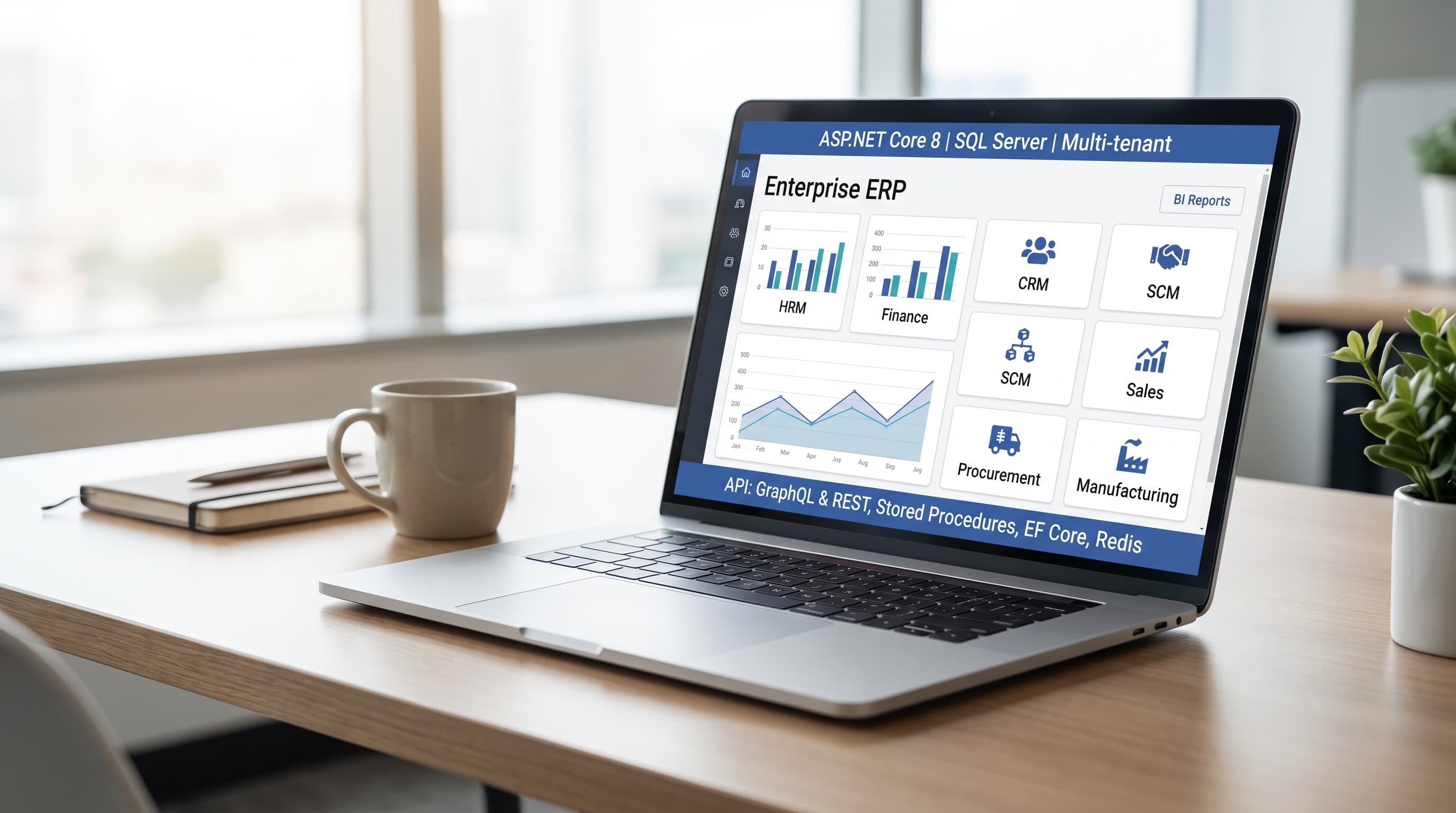
Full-stack multi-tenant ERP—ASP.NET Core 9 Clean Architecture API with React/Vite admin; Core, Admin, CRM, POS, and additional domain modules on SQL Server with GraphQL + REST.
The challenge
Enterprises needed a modular multi-tenant ERP foundation with modern admin UX, CRM/POS depth, and expandable finance/inventory/HR domains—without a risky legacy monolith or premature microservice sprawl. Without a coherent multi-tenant erp saas platform foundation, ERP SaaS Platform stakeholders faced fragmented tools, slow handoffs, and limited visibility—classic failure modes Tekvers designs against.
The solution
ERP SaaS Platform: Full-stack multi-tenant ERP—ASP.NET Core 9 Clean Architecture API with React/Vite admin; Core, Admin, CRM, POS, and additional domain modules on SQL Server with GraphQL + REST. Enterprise-shaped multi-tenant ERP foundation with a shipping CRM/POS core. Tekvers delivered a maintainable multi-tenant erp saas platform system for ERP SaaS Platform using ASP.NET Core 9, React 18, TypeScript, Vite, with phased rollout, operator workflows, and documentation suited to long-term ownership.
Approach
Platform & tenancy first
Super-admin bootstrap, auth login/refresh/logout, tenants/users/roles/permissions, audit/system logs, and tenant resolution from JWT/`X-Tenant-Id` establish the SaaS kernel before deep domain work.
CRM + POS as the mature operating cores
End-to-end CRM pipeline with line items and conversions, plus sales invoices and POS sessions/transactions—validated through REST, partial GraphQL, and `/crm/*` + `/pos/*` UI routes.
Expand modules with DI, harden stubs next
Finance, inventory/SCM (including batch/serial entities), HRM, procurement, manufacturing, projects, and reports are registered and UI-routed; stub services and authorization-policy gaps are treated as incremental delivery work—not marketed as finished plant ERP.
Deliverables
- ▸ASP.NET Core 9 Clean Architecture solution (`Api` / `Application` / `Domain` / `Infrastructure` / `Shared` / `Tests`)
- ▸React 18 TypeScript Vite admin portal with Redux Toolkit / Redux-Saga module routes
- ▸Multi-tenant shared-DB model with TenantMiddleware and setup SuperAdmin flow
- ▸JWT auth with refresh tokens; roles/permissions seeding APIs
- ▸CRM module: customers, contacts, leads, opportunities, quotes, sales orders, activities, campaigns, territories, return orders
- ▸Sales/POS: invoices, POS sessions, POS transactions
- ▸Finance, Inventory/SCM, HRM, Procurement, Manufacturing, Projects, Reports module surfaces (REST + UI; stub maturity varies)
- ▸HotChocolate GraphQL host at `/graphql` alongside REST `/api/*`
- ▸EF migrations / EnsureCreated fallback + SQL schema/SP deployment on startup
Outcomes
- ▸Enterprise-shaped multi-tenant ERP foundation with a shipping CRM/POS core
- ▸Modular boundaries for continued domain delivery on one codebase
- ▸Admin portal covering ERP domains plus explicit template demo routes called out as non-ERP
- ▸Honest maturity model: stubs and permission enforcement remain backlog, not hidden
Impact
Tekvers ERP gives operators a scalable SaaS core—new tenants bootstrap without custom forks, CRM/POS run day-to-day sales, and broader finance/inventory/HR modules expand behind the same tenancy and admin shell—without inventing cosmetics-formula features that belong to separate industry product briefs.
Tech stack
Want something similar?
I build production systems like ERP SaaS Platform—from architecture through launch. Tell me what you need.
Contact me →